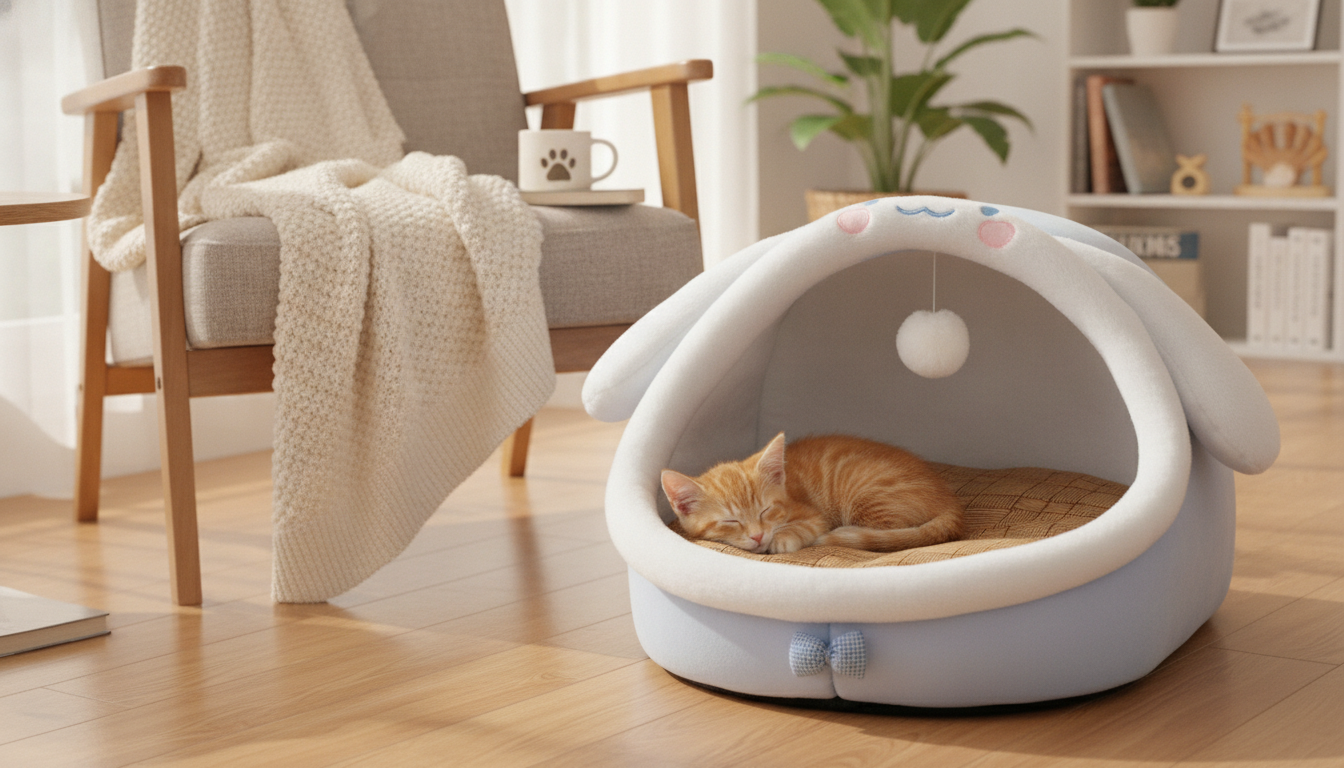
A snug sleeping spot can make a noticeable difference in how quickly a kitten or small dog settles down, especially in cooler months or drafty rooms. This rabbit-ears pet bed is designed to feel like a warm nook—plush on the outside, cozy inside, and sized for smaller pets who love to curl up and feel sheltered.
Some pets relax fastest when their bed “frames” their body, giving them a gentle boundary without shutting them away from the room. A rabbit-ears basket-style bed leans into that preference with a shape that feels cozy and predictable.
For households that run cool (AC vents, tile floors, older windows), a plush basket bed can offer a consistent “warm zone” that feels inviting even when the surrounding surfaces are chilly.
This style of bed is most satisfying for pets that naturally curl into a compact ball. If your pet regularly tucks paws under the chest, wraps the tail close, or sleeps with their chin on a soft edge, a bolstered basket can become a go-to nap station.
| Pet & sleep style | Why this style of bed helps | What to check before buying |
|---|---|---|
| Kitten that burrows | Plush warmth and a snug inner space can mimic a den-like feel | Pick a size that allows curling without compressing whiskers |
| Small dog that curls | Bolstered sides can support and reduce drafts around the body | Confirm diameter is sufficient for a comfortable curl |
| Senior cat that likes support | Raised edge can act as a soft head/neck rest | Look for easy entry height and stable base |
| Anxious pet that seeks “safe spots” | Defined boundary can feel more secure than an open mat | Place in a quiet corner away from foot traffic |
Even the softest bed can get ignored if it’s placed where the household feels busy, loud, or breezy. A few small placement tweaks often turn a “maybe” bed into the favorite spot.
If you’re establishing a calm routine, pairing a consistent resting area with predictable quiet time can support relaxation. For broader pet care guidance and routines, these resources can help: AVMA pet owner resources and ASPCA pet care.
Plush beds feel better (and last longer) when fur, dander, and small spills are handled early. A simple cadence helps prevent the “permanent pet smell” problem that can creep in over time.
For puppies and kittens still learning house rules, a washable liner can make cleanup less stressful while you build consistency. If you’re reviewing puppy care basics, AKC puppy care is a helpful reference.
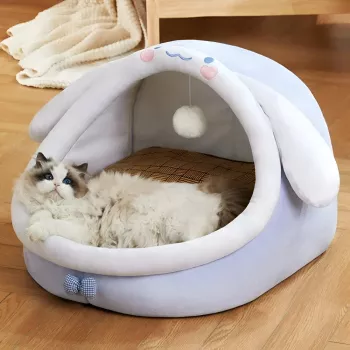
For curl-up sleepers who gravitate toward warm, plush textures, the Cozy Rabbit Ears Cat Bed – Soft, Warm Pet Basket for Kittens and Small Dogs offers a snug basket-style shape with playful rabbit-ear styling. It’s a practical way to create a dedicated nap zone in a bedroom corner, beside a desk, or near (but not directly in front of) a gentle heat source.
If your household also deals with noise-related stress, pairing a cozy resting setup with a simple plan can help. The Thunderstorm Anxiety in Pets: Quick-Action Checklist is a handy guide to keep near your pet supplies for stressful moments.
It can work well for both kittens/cats and small dogs, especially pets that prefer curling up rather than stretching out. The best choice depends on your pet’s typical sleeping posture and whether the bed’s size matches that curl-up shape comfortably.
Place the bed in a quiet, low-traffic spot and add a familiar scent (like a small blanket). Reward voluntary exploration with a treat and avoid forcing your pet into the bed so it stays a positive, self-chosen space.
Remove loose hair weekly (or more often if shedding is heavy), spot-clean as soon as messes happen, and do a deeper clean on a regular schedule that matches your household needs. If your pet has sensitive skin, stick with mild, low-fragrance detergents.









Leave a comment