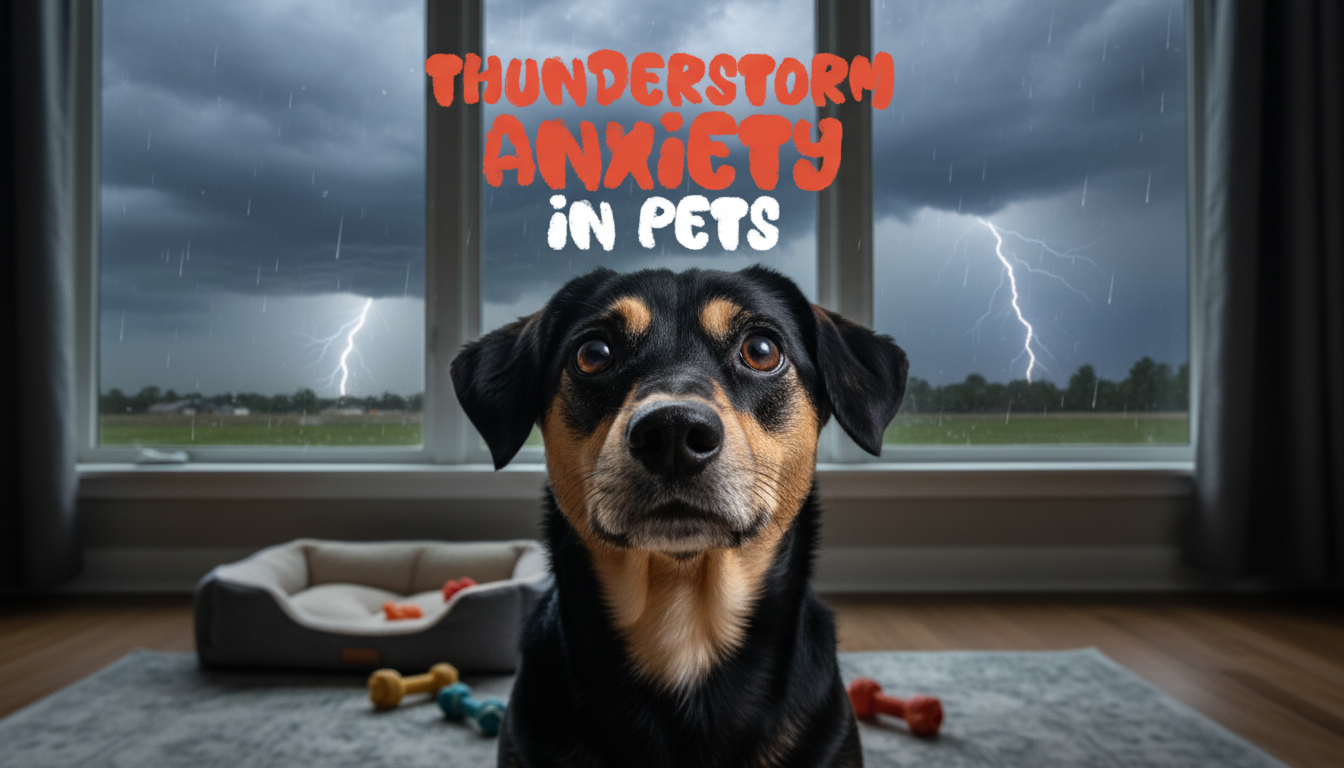
Thunderstorms can trigger intense fear in pets—pacing, panting, hiding, trembling, or attempts to escape. Having a simple plan reduces panic and helps keep everyone safe. Use the steps below to prep ahead of time, respond during the storm, and support recovery afterward, with options for both dogs and cats.
Storm anxiety can look different depending on the species—and the individual pet—but the underlying pattern is the same: the nervous system shifts into “survival mode.” Knowing the early signs helps you act before fear snowballs.
Preparation is the fastest “calming tool” available when thunder starts. A ready-made safe zone can become a cue that relief is coming.
For additional background on fear responses and anxiety patterns, see guidance from the AVMA and practical noise-phobia considerations from the ASPCA.
When the storm hits, your goal is not to “fix” the fear in the moment—it’s to prevent escalation, reduce risk, and help your pet find the safest possible behavior (settling, hiding safely, staying indoors).
| Step | Dogs | Cats | Notes |
|---|---|---|---|
| Create calm sound | White noise, TV, calm music | White noise, TV, calm music | Keep volume steady; avoid sudden changes |
| Secure the environment | Leash/harness ready; block doors | Keep indoors; close hiding hazards | Prevent bolting and unsafe hiding spots |
| Guide to safe zone | Covered crate or interior room | Interior room or familiar hiding box | Don’t force—lure with treats |
| Reward calm moments | Tiny treats for settling | Treats tossed near safe spot | Reinforce relaxation, not panic |
| Calming aids | Pressure wrap, pheromones, vet meds if prescribed | Pheromones, vet meds if prescribed | Test ahead of storms when possible |
| Monitor risk | Watch for escape attempts or overheating | Watch for prolonged hiding or aggression | Give space; avoid grabbing suddenly |
If you want a ready-to-print version to post near your safe zone, use Thunderstorm Anxiety in Pets: Quick-Action Checklist (Printable Instant Download) so every caregiver follows the same steps under pressure.
Many pets stay “keyed up” after the loudest thunder ends. A short recovery routine can prevent a second wave of panic when distant rumbles continue.
If your dog’s stress shows up as nonstop scratching, licking, or irritated skin after tough weather weeks, Itchy Mystery: Why Your Dog Can’t Stop Scratching and What You Can Do About It can help you sort common causes and next steps.
Gentle comfort is fine if your pet seeks it and it visibly reduces distress. Focus on reinforcing calm moments and providing a safe zone, rather than frantic soothing that ramps up panic.
Move to a quiet interior safe zone, add steady white noise, secure exits, and reward brief calm behaviors with tiny treats. For severe storm phobia, ask your veterinarian about training plans and vet-approved calming aids or medication.
Cats can stay in a heightened stress state even after the noise stops. Keep the home quiet, place food and water nearby, and contact a veterinarian if hiding comes with appetite loss, aggression, or litter box problems.











Leave a comment